
Anne Ellegood's article, "Character Driven: Subjectivity and the Cinematic", uses different examples to show how reality and fiction can be blurred in cinema. It asks the audience to consider how much of real life is portrayed in the movies. Ellegood quotes Director Jean-Luc Godard who says that cinema is life, there is no difference (Ellegood 114). I think that in cinema, as long as you know that it is not real, you will not be deceived. Suspension of disbelief occurs, but once the movie is over, you come back to reality and can question what you just witnessed. Even in reality television and documentaries, it is widely known not to believe everything you see.
Many of the works on exhibition at the Hirshhorn use video and film to portray how we are tricked by the media. But if you look at at these pieces, how can you just believe what they are depicting, even if they are exposing at least one truth about society? Doing that would be the same as ignoring the message are they are trying to convey. It all becomes extremely complicated and convinces me that Godard is wrong and that cinema is always slightly off from the way things really work in life.


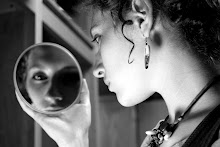
Kerry Tribe's piece Double is what really shows me that no matter how well you imitate something, it still can't be real. Five different actresses who look like the artist were hired to portray a video artist, and interpret this role using information they learned about Tribe. You cannot call these interpretations untrue, but they are definitely unreal. Even though they depict real scenes and use real background information, they cannot and will not ever be able to capture the true spirit of Kerry Tribe. Simple actors will never emit the passion of the individual herself. Yet, even if Tribe was acting as herself, could the audience believe everything is true? This piece helps to consider some of Ellewood's main questions: can virtual realism act as pure realism for an audience that will never know for sure? and what exactly is "truth" when put in the context of cinema?
I am convinced that you can not even trust that which you see with your own eyes. So nothing is real, yet everything is real. Tribe's work and Ellewood's article help to break that idea down and let the viewer perceive reality for themselves.

No comments:
Post a Comment